
Leave the Fungus, Take the Rabies

The Pathology of Rabies Virus and its Zombie Apocalypse Risk
***Spoilers for The Last of Us on HBO Max***
Even after deciding that cordyceps will most likely not cause the downfall of humanity, I can’t say I feel any better while watching The Last of Us every Sunday. After all, there are several fungal species that do cause disease in humans, infecting over a billion people each year1. The vast majority of these infections are superficial, but severe fungal infections account for 1.6 million deaths annually2.
Despite the ubiquity of fungal infections, fungi do not induce behavior commonly associated with the zombie genre. Even cordyceps, which directs the locomotion of ants3, does not induce all the behaviors exhibited by the infected in The Last of Us. Cordyceps is not spread through bites, nor does it compel its host to attack others. I know that The Last of Us is a work of fiction and aspects of existent cordyceps have been necessarily exaggerated, but there is a pathogen that can and does infect humans and bears an unsettling similarity to fictional cordyceps. Not a fungus, but a virus. Specifically, rabies virus.
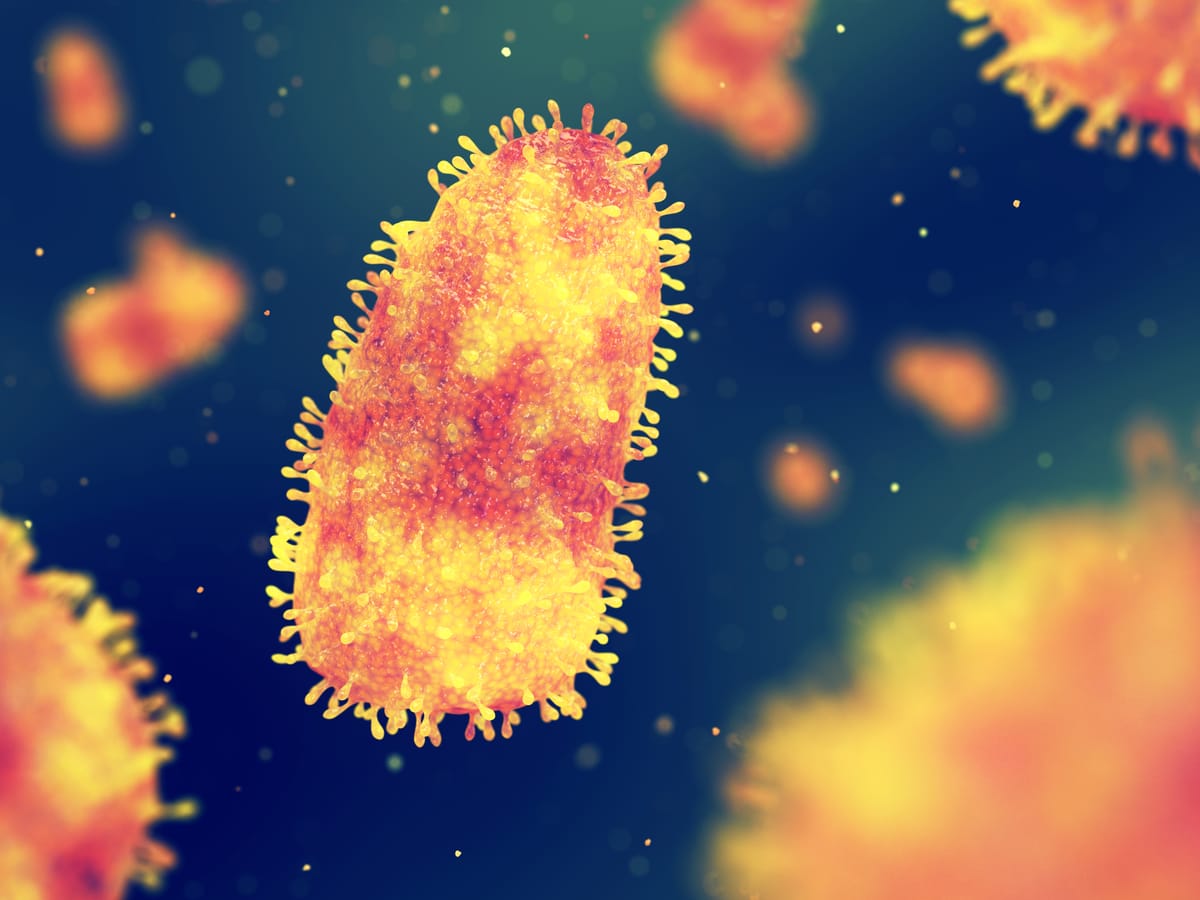
When considering infectious diseases that could cause a zombie-esque apocalypse, rabies virus ranks high on my list. Rabies virus readily infects humans and fits the bill of common zombie tropes, including mental deterioration, aberrant or aggressive behavior, and transmission through biting. Rabies virus is a member of the Rhabdoviridae family of viruses in the aptly named Lyssavirus genus (from the Greek lyssa, meaning fury or madness)4 and infects a wide variety of carnivores, including dogs, raccoons, foxes, and bats, among others5. Rabies virus is neurotropic, meaning it attacks the brain and central nervous system (CNS), causing encephalomyelitis, or swelling of the brain and CNS4.
The primary route of rabies virus transmission is through bites from infected hosts4. Rabies virus enters the nerves at the site of the bite before travelling up the CNS to enter the brain5. Once in the brain, rabies virus spreads to the salivary glands where it is secreted in saliva to enable transmission to new hosts5. The overwhelming majority of human rabies infections are caused by bites from virus-carrying animals. Dog bites account for more than 98% of human cases4.
The aggressive behavior exhibited by the infected in The Last of Us is also a symptom found in rabies victims6,7. Rabies virus so drastically alters the behavior of its hosts that it’s been posited to meet the “manipulation hypothesis”8. The manipulation hypothesis is the idea that a pathogen can alter host behavior to enhance its spread to other hosts9, much like real-life cordyceps and zombie ants or fictional cordyceps and the infected. Early symptoms of rabies include fever, headaches, weakness and itching around the bite10. As the disease worsens, more severe symptoms manifest, such as anxiety and confusion, which can progress into delirium, hallucinations, a fear of water, and insomnia10. Rabies virus possesses a protein that resembles snake toxins and binds to certain receptors in the brain and CNS, altering the behavior of infected hosts8.
The incubation period of rabies is variable, lasting weeks to months. However, once clinical symptoms appear there is no cure10. Nearly 100% of symptomatic rabies cases are fatal11. 60,000 people die of rabies every year, though it is thought that this number may be higher due to a lack of robust surveillance and under-reporting of cases5. Perhaps most distressing is that 40% of cases are children under 1511. Their small size and frequent interactions with animals put them at high risk of rabies infection, leading experts to suggest rabies be classified as a neglected pediatric disease5.
There can be no doubt that rabies is a horrifying disease that causes interminable suffering in its victims. However, there are some key features of rabies virus that make it unlikely to causes the collapse of society.
Though it’s not difficult to imagine rabies virus spreading from person to person in classic zombie outbreak fashion, human-to-human transmission through biting has never been documented12. While transmission from human bites is theoretically possible11,13, to date all cases of human-to-human spread have been a result of organ or tissue transplants11,12.
Perhaps most importantly, as a large conceit of The Last of Us relies on this point, while there may be no treatments or vaccines available for cordyceps, we do have methods of controlling rabies. As almost all human rabies cases are the result of dog bites, dog vaccination programs have been used to control the spread of rabies to great effect. Through dog vaccination campaigns, countries in Europe, North America, Latin America, and Asia have met the WHO definition of “dog rabies free”14. Furthermore, while rabies cannot be cured once symptoms arise, in humans post-exposure vaccination (i.e., immunization after being bitten but before symptom onset) successfully prevents rabies from reaching the brain11. Pre-exposure vaccines are also available for individuals at high risk of coming into contact with rabies virus11.
Unfortunately, rabies is a neglected tropical disease11, meaning it disproportionately affects vulnerable populations with limited resources and has historically been understudied15. When factoring in treatment, travel, and loss of income due to missed work, post-exposure vaccination is estimated to cost $108 per person, a prohibitive figure that limits access to these life-saving therapeutics for marginalized people who are most affected11. In response, the WHO has made eliminating rabies a target of its 2021-2030 Roadmap for the global control of neglected tropical diseases by increasing rabies education, expanding dog vaccination programs, and increasing access to post-exposure vaccines11,16.
While I believe that of our known infectious agents, rabies is one of the most uncomfortably similar diseases to fictional “zombie plagues”, it is unlikely to cause a global public health crisis on the scale of a full-blown zombie apocalypse. However, rabies remains a deadly disease with devastating outcomes in communities around the world.
References
1. Rokas A. Evolution of the human pathogenic lifestyle in fungi. Nat Microbiol. 2022;7(5):607-619.
2. American Academy of Microbiology Colloquia Reports. In: One Health: Fungal Pathogens of Humans, Animals, and Plants: Report on an American Academy of Microbiology Colloquium held in Washington, DC, on October 18, 2017. Washington (DC): American Society for Microbiology
Copyright 2019 American Academy of Microbiology.; 2019.
3. Mangold CA, Ishler MJ, Loreto RG, Hazen ML, Hughes DP. Zombie ant death grip due to hypercontracted mandibular muscles. J Exp Biol. 2019;222(Pt 14).
4. de Melo GD, Hellert J, Gupta R, Corti D, Bourhy H. Monoclonal antibodies against rabies: current uses in prophylaxis and in therapy. Curr Opin Virol. 2022;53:101204.
5. Fooks AR, Cliquet F, Finke S, et al. Rabies. Nat Rev Dis Primers. 2017;3:17091.
6. Warrell DA, Davidson NM, Pope HM, et al. Pathophysiologic studies in human rabies. Am J Med. 1976;60(2):180-190.
7. Warrell MJ. The dilemma of managing human rabies encephalitis. Trop Med Int Health. 2016;21(4):456-457.
8. Hueffer K, Khatri S, Rideout S, et al. Rabies virus modifies host behaviour through a snake-toxin like region of its glycoprotein that inhibits neurotransmitter receptors in the CNS. Sci Rep. 2017;7(1):12818.
9. Cézilly F, Thomas F, Médoc V, Perrot-Minnot MJ. Host-manipulation by parasites with complex life cycles: adaptive or not? Trends Parasitol. 2010;26(6):311-317.
10. What are the signs and symptoms of rabies? Centers for Disease Control and Prevention. https://www.cdc.gov/rabies/symptoms/index.html#:~:text=As%20the%20disease%20progresses%2C%20the,and%20treatment%20is%20typically%20supportive. Published 2021. Updated 12/23/2021. Accessed 2/17/2023, 2023.
11. Rabies. World Health Organization. https://www.who.int/news-room/fact-sheets/detail/rabies#:~:text=Once%20clinical%20symptoms%20appear%2C%20rabies,rabies%20virus%20transmission%20to%20humans. Published 2023. Updated 1/19/2023. Accessed 2/20/2023, 2023.
12. Rabies Exposure in Healthcare Settings. Centers for Disease Control and Prevention. https://www.cdc.gov/rabies/specific_groups/hcp/exposure.html#:~:text=The%20most%20common%20way%20people,transmission%2C%20including%20in%20healthcare%20settings. Published 2021. Updated 1/14/2021. Accessed 2/16/2023, 2023.
13. How is rabies transmitted? Centers for Disease Control and Prevention. https://www.cdc.gov/rabies/transmission/index.html#:~:text=Bite%20and%20non%2Dbite%20exposures,associated%20with%20risk%20for%20infection. Published 2019. Updated 6/11/2019. Accessed 2/16/2023, 2023.
14. World Health O. WHO expert consultation on rabies: third report. Geneva: World Health Organization; 2018.
15. Neglected Tropical Diseases. National Institute of Allergy and Infectious Diseases. https://www.niaid.nih.gov/research/neglected-tropical-diseases#:~:text=Neglected%20tropical%20diseases%20(NTDs)%2C,much%20attention%20as%20other%20diseases. Published 2016. Updated 7/11/2016. Accessed 2/21/2023, 2023.
16. Ending the neglect to attain the Sustainable Development Goals: A road map for neglected tropical diseases 2021–2030. Geneva, Switzerland2020.