There is No Cure

Why fungal infections are so difficult to treat
***Spoilers for The Last of Us on HBO Max***
“And there are no treatments for this. No preventatives, no cures. They don’t even exist. It’s not possible to make them.”
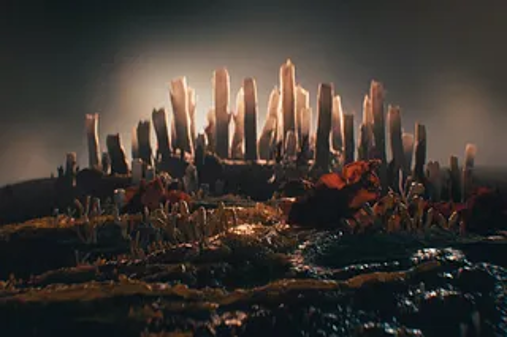
This statement, made by Dr. Neumann at the beginning of episode one, is an omen of what is to come in The Last of Us. Episode two opens thirty-five years later with mycology professor Dr. Ratna, played by Christine Hakim, being roused from her lunch by the military and escorted to a hospital where she is asked to examine a sample under the microscope. She identifies it as Ophiocordyceps but is clear that the sample could not have originated from a human as the soldier tells her. She is then taken to examine the body from which the sample was obtained. Dressed in her high containment gear, Dr. Ratna makes an incision at a bitemark on the body’s leg, beneath which lies a white, spongy substance. Receiving confirmation that the bite is human she examines the body’s mouth. From deep within the throat, she slowly extracts tendrils that reach for her as they’re removed. Startled, Dr. Ratna has the good sense to promptly exit.
Seated on a couch outside the autopsy room, Dr. Ratna is told of where the body came from. Thirty hours ago, at a flour and grain factory, a woman became violent and bit three of her coworkers before she was killed by the police. The people she bit were taken for observation and were also killed after becoming violent within a few hours. However, fourteen other factory workers remain missing. Dr. Ratna has been brought in to help contain the outbreak, but as she says, “I have spent my life studying these things. So please listen carefully. There is no medicine. There is no vaccine.” When asked what they should do, she responds simply, “Bomb.”
In the world of The Last of Us becoming infected is effectively a death sentence. There are no treatments. There are no vaccines. With no way to contain it, cordyceps spreads throughout the population unchecked. Twenty years after the initial outbreak there is still no cure when Joel takes Ellie west in the hopes that her natural immunity may be the key to an antidote.
In real life, as in the show, there also aren’t any treatments or vaccines for cordyceps…because there is no need for them. Cordyceps doesn’t infect humans and the odds that it adapts to do so are low. It’s just not a disease that humans need to worry about. But there are ~300 species of fungi that are pathogenic to humans1. Superficial fungal infections are extremely prevalent, affecting around one billion people annually2. Fungal infections are responsible for 1.6 million deaths per year, more than tuberculosis or malaria2. Despite this, pathogenic fungi are understudied compared to other infectious diseases1,2.
The World Health Organization (WHO) has ranked the health risks associated with fungi in the WHO fungal priority pathogens list (WHO FPPL) by critical, high, and medium priorities. According to the WHO FPPL, four fungi are of critical priority: Cryptococcus neoformans, Candida auris, Aspergillis fumigatus, and Candida albicans3. Cryptococcus and Aspergillis infect the lung and cause pneumonia-like disease4. Candida albicans often colonizes the body without harm, though excessive growth can result in thrush of the mouth and throat as well as vaginal yeast infections4. Candida auris was isolated in 2009 and due to its antifungal resistance, high mortality rate of 30-60%, and widespread dissemination has been classified as an urgent health threat by the Centers for Disease Control and Prevention (CDC)4-6. C. auris is now so ubiquitous that the CDC no longer tracks global infections5.
The incidence of these diseases is increasing, primarily affecting the most vulnerable among us such as those with weakened immune systems or other underlying health conditions3. to make matters worse, antifungal resistance is on the rise7. This is especially alarming as treatment options for fungal infections are already limited3,7.
There are four classes of antifungals currently available for clinical use: azoles, echinocandins, polyenes, and pyrimidine analogs8,9. Azoles inhibit ergosterol biosynthesis and are the most commonly used antifungals due to their low toxicity and effectiveness across a broad spectrum of fungal species8. Ergosterol is a molecule found in the fungal cell membrane that is needed for many cell functions. Echinocandins are β-glucan inhibitors. β-glucan is a key component of the cell wall and by inhibiting its synthesis echinocandins disrupt the growth of fungal cell walls, leading to cell death8. Polyenes belong to a class of molecules known as macrolides. Polyenes act by binding to molecules in the fungal cell membrane, causing the fungal cell to rupture and die. Polyenes have the broadest antifungal activity against a spectrum of fungi and were the first antifungals approved for clinical use8. Pyrimidine analogs are taken into the cell through fungi-specific molecules where they replace a normal component of fungal DNA and inhibit DNA synthesis and mitosis8.
Unfortunately, antifungal resistance is becoming more and more common. Fungi develop resistance through host infections and the environment. During antifungal treatment, resistant cells are positively selected for because they are not killed by the drug. These surviving cells then continue to grow and evolve, becoming more and more resistant over time, much like how bacteria acquire antibacterial resistance9. Fungi are also exposed to inhibitory compounds in the environment, often through the use of fungicides in agriculture, leading them to develop antifungal resistance9.
The rate at which resistant pathogenic fungi are emerging is outpacing the discovery of new antifungals10. Azoles are ineffective against some emerging pathogenic fungi and azole resistance is common because these drugs are fungistatic rather than fungicidal8 (fungistatic compounds inhibit fungal growth while fungicidal compounds kill the fungus). Resistance to pyrimidine analogs is so common that they are now primarily used to supplement other treatments rather than as a primary therapeutic8. Echinocandin-resistance is often seen in people previously treated with these drugs9.
Pathogenic fungi pose unique challenges to developing therapeutics that have slowed antifungal discoveries. First, as previously stated, these diseases have historically been understudied relative to bacteria and viruses, limiting what we know about them. Second, fungi and human cells belong to the same taxonomic domain. Both cell types are eukaryotic, meaning they are closely related evolutionarily and share many cellular proteins and functions11. Therefore, scientists must identify drug targets that are both unique to fungi and will result in fungal cell death when interfered with. Targeting molecules that are shared by humans isn’t ideal as they will have some level of toxicity. For example, despite the potent antifungal activity of polyenes, these drugs also bind to cholesterol found in human cells and have undesirable side effects, such as liver and kidney toxicity, which limits their use8. Identifying good targets is in part why no vaccines against fungal pathogens exist yet either12.
It's not all bad though. In recent years pathogenic fungi have received much more attention as critical public health threats. There is now a global effort to prioritize these diseases and review what is known and unknown about them to guide public health policy decisions and develop new treatments3. And while there has been a lack of general awareness about the omnipresent dangers of fungal infections, mycologists have been hard at work identifying and developing new therapeutics that can overcome these challenges. This has led to drug discoveries and developments, such as a new generation of fungicidal azoles with a broad spectrum of antifungal activity and polyene formulations that reduce toxicity8. Antifungal vaccine candidates are also starting to make their way into clinical trials after promising preclinical studies12. One vaccine, developed by Dr. Karen Norris’s group at the University of Georgia, targets three common fungal pathogens, Aspergillis, Candida, and Pneumocystis13. Just this year researchers in Germany published a report in the Journal of the American Chemical Society describing the antifungal activity of compounds secreted by Pseudomonas bacteria as a defense against predatory amoeba species. The compounds were so potent in their ability to kill fungi that they named them “keanumycins” after action-star Keanu Reeves14.
As season one of The Last of Us comes to an end, I must admit that I’ve enjoyed it much more than I thought I would. I still close my eyes whenever the infected come on screen, but the story and the characters have more than made up for my aversion, and I can’t help but admire the way The Last of Us seamlessly meshes science with fiction to create an unnerving sense of realism. Yes, cordyceps is real. No, it does not infect humans. But if it did, to quote Dr. Neumann, “We lose.”
References
1. Stop neglecting fungi. Nature Microbiology. 2017;2(8):17120.
2. Rokas A. Evolution of the human pathogenic lifestyle in fungi. Nat Microbiol. 2022;7(5):607-619.
3. WHO fungal priority pathogens list to guide research, development and public health
action. Geneva2022.
4. Barnhart M. WHO releases list of threatening fungi. The most dangerous might surprise you. NPR. https://www.npr.org/sections/goatsandsoda/2022/10/26/1131602076/who-releases-list-of-threatening-fungi-the-most-dangerous-might-surprise-you. Published 2022. Accessed 2/15/2023, 2023.
5. Egger NB, Kainz K, Schulze A, Bauer MA, Madeo F, Carmona-Gutierrez D. The rise of Candida auris: from unique traits to co-infection potential. Microb Cell. 2022;9(8):141-144.
6. 2019 AR Threats Report. Centers for Disease Control and Prevention. https://www.cdc.gov/drugresistance/biggest-threats.html. Published 2019. Updated 11/23/2021. Accessed 2/17/2023, 2023.
7. Denning DW. Antifungal drug resistance: an update. Eur J Hosp Pharm. 2022;29(2):109-112.
8. Campoy S, Adrio JL. Antifungals. Biochem Pharmacol. 2017;133:86-96.
9. Fisher MC, Alastruey-Izquierdo A, Berman J, et al. Tackling the emerging threat of antifungal resistance to human health. Nat Rev Microbiol. 2022;20(9):557-571.
10. Fisher MC, Hawkins NJ, Sanglard D, Gurr SJ. Worldwide emergence of resistance to antifungal drugs challenges human health and food security. Science. 2018;360(6390):739-742.
11. Scorzoni L, de Paula ESAC, Marcos CM, et al. Antifungal Therapy: New Advances in the Understanding and Treatment of Mycosis. Front Microbiol. 2017;8:36.
12. Oliveira LVN, Wang R, Specht CA, Levitz SM. Vaccines for human fungal diseases: close but still a long way to go. NPJ Vaccines. 2021;6(1):33.
13. Rayens E, Rabacal W, Willems HME, et al. Immunogenicity and protective efficacy of a pan-fungal vaccine in preclinical models of aspergillosis, candidiasis, and pneumocystosis. PNAS Nexus. 2022;1(5).
14. Götze S, Vij R, Burow K, et al. Ecological Niche-Inspired Genome Mining Leads to the Discovery of Crop-Protecting Nonribosomal Lipopeptides Featuring a Transient Amino Acid Building Block. Journal of the American Chemical Society. 2023;145(4):2342-2353.